
1
Define the shortlist criteria
Name the stack, product context, ownership level, and must-validate skills before reviewing candidates.

A stronger shortlist starts before interviews. Recruiter teams need a repeatable way to connect role requirements with visible developer evidence, then explain why each candidate should move forward instead of relying on broad keyword matches.
What this page helps answer
Put this guide to work
The point of GitHub-first review is not more browsing. It is a better first-pass standard that recruiters and hiring managers can use consistently.
Name the stack, product context, ownership level, and must-validate skills before reviewing candidates.
Use public projects, portfolio depth, and contribution context to decide whether each candidate fits the need.
Move candidates forward with short notes that explain the evidence, concerns, and recommended next step.
In the product
The goal is to keep enough role-fit, work-sample, and screening context visible that the next decision is grounded in evidence instead of resume shorthand.
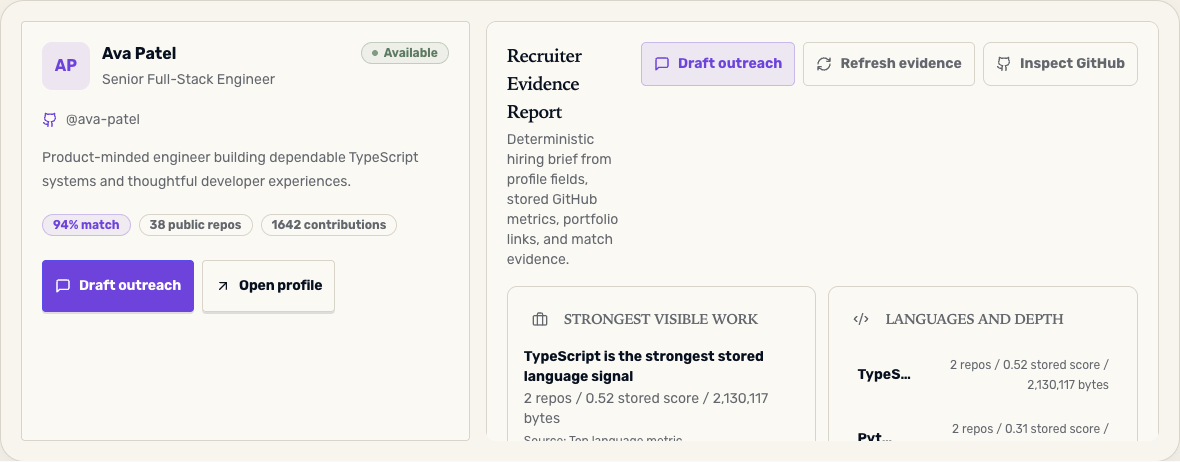
Shortlisting breaks down when recruiters start with a large candidate list and vague filters. Before reviewing profiles, define what the role actually needs: languages, system context, product domain, seniority signals, and ownership expectations.
Those criteria should be specific enough to guide decisions but lightweight enough to use repeatedly. The goal is not a perfect rubric. It is a clear standard that keeps the first pass from drifting into guesswork.
Public work helps recruiters inspect evidence that resumes compress or omit. A relevant repository, maintained portfolio project, or clear contribution history can show whether the candidate has done work that resembles the open role.
That evidence should not replace every later step, but it can decide who deserves those later steps. A shortlist built from visible work usually gives hiring managers more context than one built only from profile keywords.
A shortlist is only useful if the next reviewer understands why each candidate is there. Recruiter notes should explain the relevant evidence, where it was found, and what still needs validation.
Keep the note short. Mention the project, the role-fit signal, and one follow-up question. That gives hiring managers a concrete starting point instead of another profile to rescan from scratch.
Recruiter next step
GitTalent helps recruiter teams keep technical context attached to sourcing, screening, outreach, and evaluation instead of losing it across disconnected tools.