
1
Define the role signals
Name the languages, architecture patterns, product context, or ownership clues that matter for the role before you source.

Keyword filters are convenient, but they flatten engineering ability into resume phrasing. A GitHub-first screening pass gives recruiters a stronger way to decide who deserves closer review before the process gets expensive.
What this page helps answer
Put this guide to work
The point of GitHub-first review is not more browsing. It is a better first-pass standard that recruiters and hiring managers can use consistently.
Name the languages, architecture patterns, product context, or ownership clues that matter for the role before you source.
Open a few relevant repositories and assess whether the visible work aligns with the job you are filling.
Let resume wording confirm context after GitHub evidence has already improved the shortlist.
In the product
The goal is to keep enough role-fit, work-sample, and screening context visible that the next decision is grounded in evidence instead of resume shorthand.
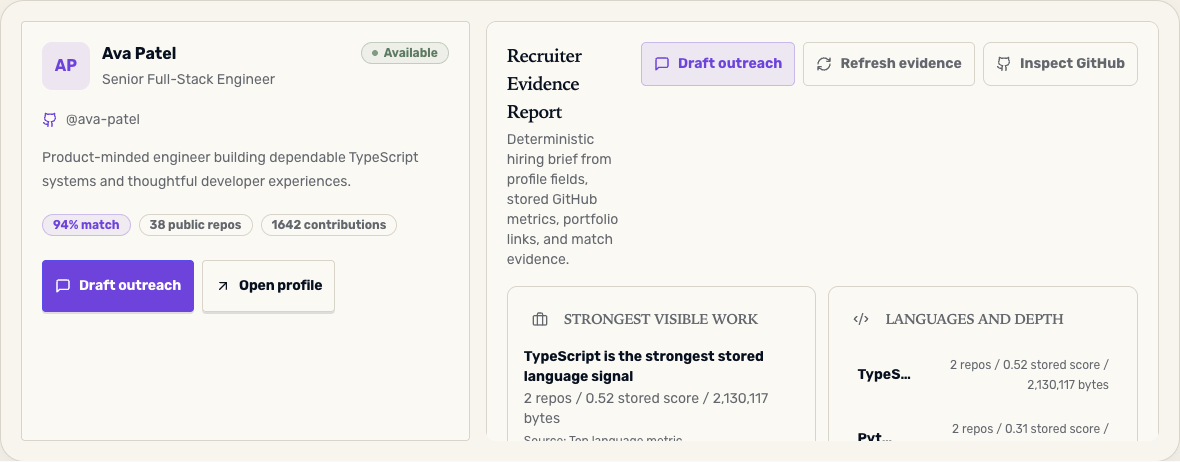
Keyword filtering is useful when you need to process volume, but it tends to reward candidates who describe themselves in familiar language rather than candidates whose public work best matches the job.
That is especially costly in developer hiring, where strong engineers may undersell themselves, move across stacks, or work in public repositories that tell a much richer story than their resume summary does.
A good first screen is not about stars or follower counts. It is about whether the visible work looks relevant to the role and whether the developer appears to have meaningful ownership in the projects that matter most.
That means looking for role-fit, maintained repositories, readable project framing, and evidence that the candidate can ship work that resembles the environment your team hires into.
The best screening process is lightweight enough for recruiters to run consistently. Set a narrow checklist, review a small number of repositories, and save reusable notes instead of reinventing the process for every candidate.
That makes GitHub screening operational rather than aspirational. It improves recruiter throughput while still giving hiring managers better early context than a raw keyword search ever could.
Recruiter next step
GitTalent helps recruiter teams keep technical context attached to sourcing, screening, outreach, and evaluation instead of losing it across disconnected tools.